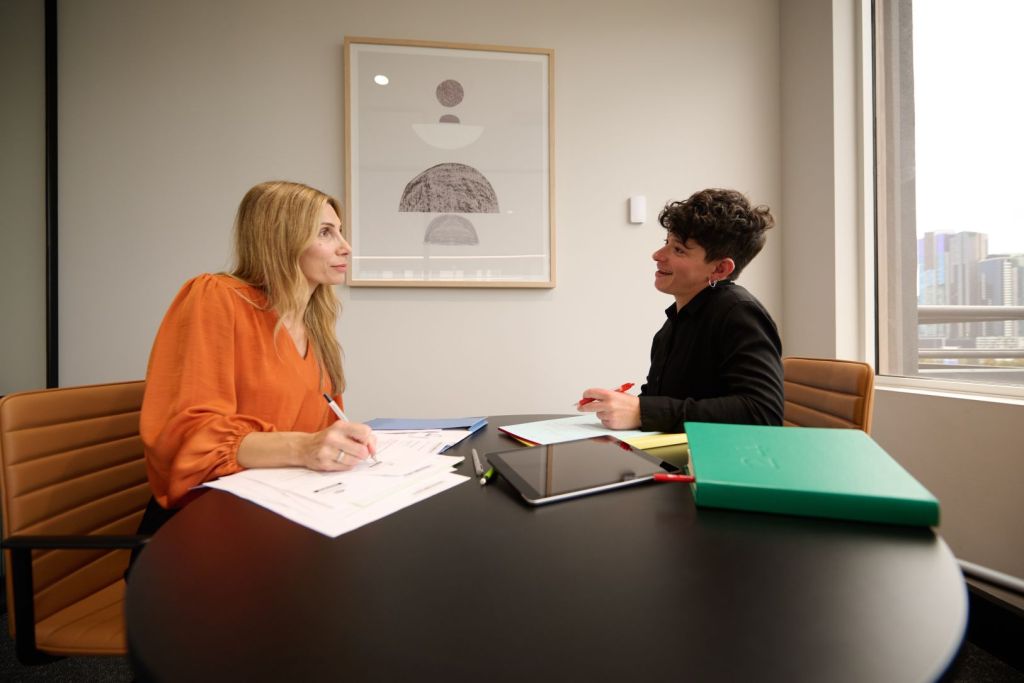
At some point in our lives, most of us will rely on someone else to help us make decisions.
It might be temporary, after an accident, an illness, or during a period of stress. Or it might be ongoing, because of disability, ageing, or cognitive impairment. What’s rarely discussed is how quickly help can turn into control, and how easily a person’s own voice can disappear in the process.
The question we should be asking is a simple one:
Who decides when you can’t?
And perhaps more importantly: on what basis, and for how long?
For decades, our legal systems have answered this question through guardianship and administration. When someone is assessed as lacking “capacity”, decision-making power is transferred to another person, a guardian, administrator, or public authority who is expected to act in the individual’s “best interests”.
On paper, this sounds protective. Sensible, even.
In practice, it often means something far more profound: a person losing the legal right to make decisions about their own life.
This can include decisions about where to live, how to spend money, what medical treatment to accept, who to have relationships with, and how much risk is acceptable.
What is striking is how normalised this loss of legal voice has become, particularly for people with disability.
Human decision-making is messy. It fluctuates. It is influenced by stress, fatigue, information, trust, and context. Yet the law has traditionally treated capacity as something close to an on–off switch: you either have it, or you don’t.
This framing creates a dangerous shortcut.
If a person is seen as incapable, the system moves swiftly to replacement rather than support. The focus shifts from how can we help this person decide? to who should decide instead?
That shift matters.
Because once substitution becomes the default response, the person at the centre is no longer the decision-maker, they are the subject of a decision.
Supported decision-making begins from a fundamentally different assumption:
People do not lose the right to make decisions simply because decision-making is difficult.
Instead of replacing the person’s will, supported decision-making asks what assistance, relationships, tools, or adjustments are needed so the person can exercise their legal capacity as far as possible.
Support might include:
- trusted supporters helping to explain options,
- communication aids or accessible information,
- time to consider decisions,
- structured conversations rather than formal assessments.
Crucially, the decision remains the person’s own, even if others would have chosen differently.
This approach is not about abandoning safeguards. It is about redesigning them so that protection does not come at the cost of autonomy.
This debate is often framed as a niche issue, something relevant only to disability advocates or specialist lawyers. That is a mistake.
Questions about decision-making power go to the heart of how systems understand risk, responsibility, dignity, and trust. They affect hospitals, financial institutions, service providers, boards, trustees, and governments.
They also reveal a deeper tension in modern governance: our discomfort with uncertainty, and our preference for control when outcomes feel unpredictable.
Supported decision-making challenges that instinct. It asks systems to tolerate risk, listen more carefully, and accept that autonomy sometimes includes choices others would not make.
Internationally, supported decision-making is grounded in the UN Convention on the Rights of Persons with Disabilities, which recognises legal capacity as a universal human right.
In Australia, reforms, including Victoria’s 2020 guardianship changes, reflect this shift in principle. Yet implementation remains uneven. Old habits persist. Substitute decision-making continues to dominate practice, even where the language of support is adopted.
This gap between law, policy, and practice is where the real work lies.
So, who decides when you can’t?
Too often, the answer is: the system does. And too rarely: you, with support.
Because the question is not whether some people need help to make decisions.
We all do. The question is whether needing help should ever mean losing your voice.





Leave a comment